Find a Herbalist
Contact Us

Tag: health

  • Food, Herbs, Health and Healing

    Food, Herbs, Health and Healing

    Health and Longevity from Pre-History to Modern Day
    Natural healing methods from around the world to promote well-being.
    ISBN: 978-1-60860-653-5

    From the author of 100 Herbs of Power, Herbalist John E. Smith takes a look at the use of food and herbs as medicine in different cultures.

    From the folk medicine traditions of Europe & America to the five-element system of China, you will learn the healing properties of plants and how to safely use ancient remedies for dozens of common ailments.

    Food, Herbs, Health & Healing is a practice-proven way to achieve better health, naturally.

    John E. Smith, B.A. (Hons) M:URHP,Dip C.H., is a Classical Herbalist, who has worked and studied throughout Europe, the United States, China, India, Australia, the South Pacific and the Middle East. His interest in traditional systems of healing has inspired this multi-cultural approach to herbal medicine.

    Publisher’s website:
    http://strategicpublishinggroup.com/title/FoodHerbsHealthandHealing.html

    John E Smith: http://herbalkhemy.com (WARNING! BROKEN LINK!)

    Recent Reviews:

    This book has improved my health – just by reading it. It is a treasure of knowledge on herbs, food and healing practices from cultures all round the world, from ancient to right up to date. The author makes it clear that herbal medicine is not a science – it is a healing art. He successfully assists the reader to view the body as a whole rather than a collection of unrelated parts. Written with warmth and humour this book is based on the author’s practice and passion for herbal medicine traditions and is an excellent follow-up to his previous book 100 Herbs of Power. – Moya Henry: Crescent Arts – Belfast

    ‘Food, Herbs, Health & Healing’ by J.E. Smith is the book for those who would like a natural approach to health, healing and beauty.

    Combining ancient knowledge with modern facts, easily explained and therefore easy to put into practice. John E Smith outlines a drug free approach to health under the belief that nature is the greatest healer. – Aranza Cobo – Editor ‘Back to Nature’ Magazine
  • The Complementary Therapists Guide to Conventional Medicine, by Clare Stephenson

    The Complementary Therapists Guide to Conventional Medicine, by Clare Stephenson

    This book was written by a Western medical doctor who then trained with the college of Integrated Chinese Medicine, and subsequently devised a study course for the students of that school – the intention is to bridge the gap between the two styles of medicine, and to build as many connections as possible to facilitate communication between Western and complementary (the term alternative is not used) practitioners. It was written primarily for those who are studying or practising alternative medicine to give them an understanding of conventional medicine. The book is intended either to be purely a reference book, or a complete study course, as it contains frequent helpful self- assessment tests that ensure an understanding of the text. There are also many case studies that help to make it more user-friendly – we are, after all, treating people, not diseases or body systems.The only other book I have come across attempting to do a similar thing is that written by Stephen Gascoigne  –  The Clinical Medicine Guide: A Holistic Perspective – and Stephenson refers to this on several occasions. Gascoigne’s focus is more on the alternative therapy than conventional, so the two books would complement each other rather well. 

    This is far more than just a book about physiology and disease – it describes how a Western conventional doctor decides on diagnosis and treatment, and all the considerations that have to play a role in those decisions. The section on drugs tells how to find information about medication from the British National Formulary and where it is freely available online; there is an interesting section on drug classification, and also on how to help patients withdraw from specific medication.

    There are sections on ‘red flag’ conditions, which appear in each chapter relating to disease – these are summarised in the appendix, making this a valuable resource.There is a large section on mental health disorders covering anxiety, depression, eating disorders and psychoses. There are chapters on disease processes, cancer, infectious disease; the anatomy and physiology of all body systems are explained in very readable form, together with their disorders and problems; chapters on children’s health, pregnancy and childbirth follow. The chapter on diseases of the endocrine system is well written as a teaching aid. The explanations of all the various conventional tests are likely to be valuable  information about blood tests, investigative tests such as barium swallow, endoscopy, cystoscopy etc. The section on how to communicate with conventional medics is a great idea.

    The accompanying CD contains extra material in the form of several appendices. One summarises and compares the functions of body organs from both a Western and a Traditional Chinese Medicine perspective – very useful for those wanting to bridge the information gap between the two medical systems. Another looks at the interpretation of the energetic action of drugs, how they relieve symptoms and their side effects from a TCM perspective – a how-to-do-it guide for specific drugs. The red flag appendix, and the withdrawal of drug appendix, are extensions of the information contained in the book – both contain a lot more information and should prove very useful. For those using the book as a study guide there is a helpful appendix of check lists as summaries of topics studied. 

    Potentially extremely useful to anyone doing presentations is the fact that all the diagrams and pictures in the book are available to export from the CD.

    Although this book is most relevant to those studying or practising Chinese Medicine it has relevance to Western and Ayurvedic herbalists too. An understanding of TCM would make a difference to how much the reader will get out of this book; but it can very easily be primarily used as a study guide or reference in the understanding of conventional Western medicine. 

    This book would make an excellent text book for anyone studying any alternative therapy and requiring an understanding of the way conventional medicine works. It would also make an excellent anatomy and physiology textbook – so this twin function more than makes up for its lack of breadth from an alternative perspective.

    Reviewed by Christine Herbert

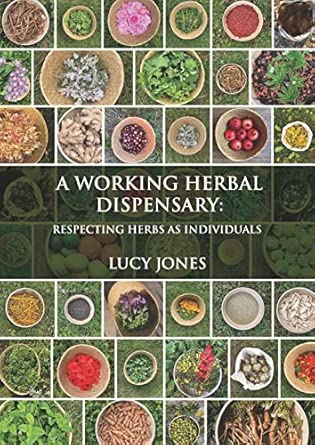
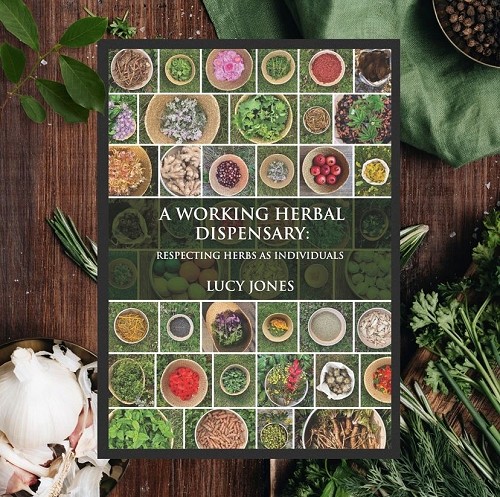
  • A Working Herbal Dispensary: Respecting Herbs as Individuals by Lucy Jones

    A Working Herbal Dispensary: Respecting Herbs as Individuals by Lucy Jones

    A beautifully illustrated guide on how to understand and engage with medicinal herbs.

    In her fascinating second book, full time medical herbalist Lucy Jones shares the characters and medicinal virtues of 108 herbs that she works with in her practice. Each herb is written as an individual that she knows and respects, rather than simply a list of conditions it treats or the constituents it contains.

    Guided by Lucy’s engaging and thoughtful prose, readers will journey through the physiological actions, energetic qualities, and emotional resonances of individual herbs, as well as qualities according to Tibetan Medicine, where they apply. Also included are historical views, magical associations, recipes for the home apothecary and many informal case studies to illustrate the virtues of the herbs.

    Beautifully illustrated with colour photographs throughout, A Working Herbal Dispensary is more than your run of the mill herbal; it is an insight into a holistic practice where herbs and herbalist are working in partnership for the benefit of those that need help.

    “The book is a rare gem, as it is not just re-writing every other herb book but comes from the heart of a busy practitioner who uses herbs clinically every day. Lucy doesn’t just ‘use’ the herbs to ‘fix what’s broken’, rather she understands how they holistically heal the whole person. These monographs are not just short paragraphs of what conditions the plants are ‘good for’, but a top-notch interweaving of tradition and experience that capture the medicinal essence of the plants. ‘The binding of this book is going to become well-worn over the years.”
    Sajah Popham, founder of ‘The School of Evolutionary Herbalism’

    “Another wonderful herbal from Lucy, rich in ancient lore and insights from the Tibetan tradition brilliantly interwoven with wisdom, experience, and practical tips from a working herbalist and a self-sufficient one too! With fascinating and detailed descriptions of over one hundred herbs, enlivened by photos of herbs lovingly grown and foraged by Lucy, this book is testimony to the living tradition of herbalism in England and a great opportunity to learn how a clinical herbalist implements the tools of their trade. Thank you, Lucy!”
    Anne McIntyre, medical herbalist (FNIMH) and author of ‘The Complete Herbal Tutor’ and ‘Healing with Flowers’

    “This work will undoubtedly go on to become canon in the arena of herbal medicine. It does not just provide information, with Lucy’s deep understanding and long clinical practice, it’s also experiential.  A Working Herbal Dispensary takes us on a journey into the plant kingdom; a journey where we experience and really connect with the energies, and magic, we encounter when we work with healing plants.”
    Karen Stone, founder of the Arura Healing Centre and practitioner of Traditional Tibetan Medicine

    A Working Herbal Dispensary is published by Aeon Books.